

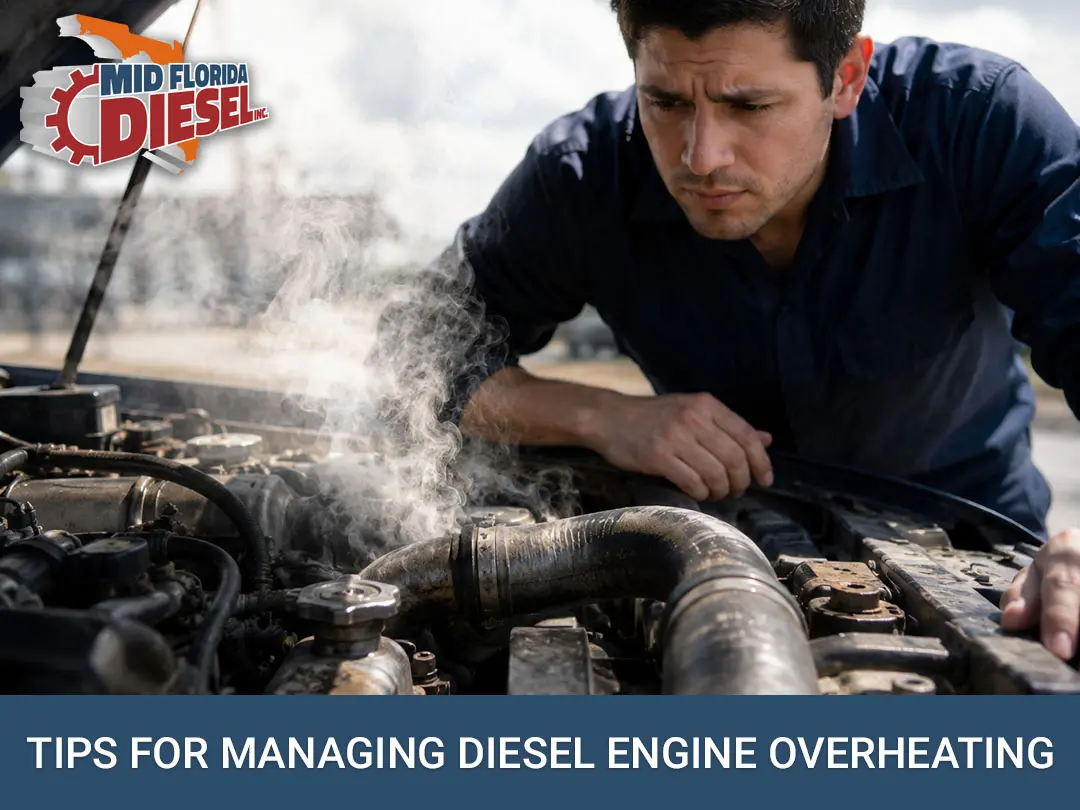
Diesel engines are built to withstand heavy use, but excessive heat can quickly lead to serious problems. Whether hauling heavy loads, operating construction equipment, or supporting agricultural operations, overheating can lead to costly repairs, unplanned downtime, and shortened engine life. In Florida, high temperatures and humidity are typical for much of the year, so keeping your engine cool is an important part of preventive maintenance.
Mid Florida Diesel regularly assists equipment owners and fleet managers in determining why their diesel engines are overheating and in developing maintenance plans to help ensure they continue to run reliably. Knowing what causes overheating and how to respond can help reduce the risk of major mechanical failures.
Understanding Why Diesel Engines Overheat
Modern diesel engines generate a lot of heat when they are running. Normally, the cooling system handles that heat just fine by circulating coolant and air and keeping the temperature in check. Problems occur when one or more parts of the cooling system don’t work as they should.
Low coolant levels, clogged radiators, broken water pumps, cracked hoses, broken thermostats, cooling fan problems, or limited airflow can cause overheating. Overheating can occur when the engine is overworked, poorly maintained, or has internal problems.
As diesel engines have become more technologically advanced, so too have their cooling systems. Advances in electronic sensors and engine management systems provide earlier warnings of developing temperature problems, allowing operators to prevent serious damage before it occurs.
Recognizing Early Warning Signs
Temperature Gauges Tell an Important Story
An excellent way to prevent heat damage is to recognize the warning signs early. The first sign that something is not working well is often an increase in the temperature gauge. Operators who regularly monitor engine temperature are often able to spot developing problems before they become emergencies.
Many modern diesel engines have digital monitoring systems that provide additional warnings about coolant temperature, pressure, overall engine performance, and more. Heeding these notifications could help avoid more expensive repairs.
Changes in Performance May Signal Trouble
Signs of an overheating engine include reduced power, strange smells, steam coming from the engine compartment, or warning lights on the dashboard. Some newer diesel engines will automatically reduce power output if temperatures go above safe operating ranges.
These precautions help minimize damage but should never be ignored. Operating an engine that runs hot can lead to higher repair costs and downtime.
Proper Cooling System Maintenance
Regular servicing is one of the most effective ways of preventing overheating. Regularly checking all coolant levels, belts, radiators, and cooling fans can identify wear before it causes failure.
Another thing to consider is the quality of the coolant. Contaminants can enter the coolant, or it can lose its protective properties over time. Changing the coolant at the manufacturer’s recommended intervals helps ensure efficient heat transfer and protect internal cooling system components.
Also, check radiators for dirt, debris, insects, and other obstructions that could block airflow. This is especially true for equipment used in construction, agriculture, or off-road environments.
Operating Conditions Matter
Florida’s climate can increase the stress on diesel engines. When the engine is under heavy load, high ambient temperatures make it more difficult for the cooling systems to dissipate heat.
Operators can reduce the risk of overheating by carefully selecting workloads, avoiding unnecessary idling, and scheduling maintenance during periods of high demand. For heavier-duty equipment that regularly runs under heavy loads, cooling system inspections may need to be more frequent than for lighter-duty applications.
Having a clear understanding of the operating environment allows owners and fleet managers to adapt maintenance schedules and reduce the probability of unplanned failures.
When Professional Diagnostics Are Necessary
Some overheating problems are simple; others require special diagnostic equipment. Without proper testing, it can be hard to identify internal engine issues, faulty sensors, low coolant flow, and problems with the electronic control unit.
Professional diesel technicians can diagnose the whole cooling system and find the cause of ongoing temperature issues. Early diagnosis can prevent minor issues from becoming major engine repairs.
A prompt inspection after an overheating event frequently helps reduce repair costs and limit the risk of further component damage.
Frequently Asked Questions
What causes a diesel engine to overheat?
Common causes include low coolant levels, radiator restrictions, failing water pumps, damaged thermostats, cooling fan issues, and excessive engine loads.
Can overheating damage a diesel engine?
Yes. Severe overheating can damage head gaskets, cylinder heads, pistons, and other internal engine components if not addressed promptly.
How often should diesel cooling systems be inspected?
Cooling systems should be inspected during routine maintenance intervals, with additional inspections for equipment operating under heavy workloads or harsh conditions.
Why are diesel engines more prone to overheating in Florida?
High temperatures, humidity, heavy workloads, and extended operating periods can place additional demands on cooling systems throughout Florida.
Protecting Your Diesel Equipment Investment
Managing diesel engine overheating starts with preventive maintenance, early problem detection, and professional service when needed. Cooling system performance directly affects engine reliability, equipment uptime, and overall operating costs. In Florida, where environmental conditions can place additional demands on diesel equipment, proactive maintenance becomes even more valuable.
At Mid Florida Diesel, we help equipment owners, fleet operators, and businesses maintain dependable diesel performance through expert diagnostics, maintenance, and repair services. If your diesel engine is showing signs of overheating or you want to improve your cooling system’s reliability, contact us today and let us help keep your equipment operating at its best.
Picture Credit: Freepik